
12 Wedding Color Palettes Built Around Flowers
-
 Sarah Browning | 01 Apr, 2026
In This Article
The thing nobody tells you when you start wedding planning is- most couples pick a color palette first and then base their flowers into it. And then they end up with dusty blue roses that don’t exist in nature and a florist who charges $400 extra to source them.
I did it the other way around. I had two flowers I loved, peach garden roses and blue delphinium, and I built everything else from there. The linens, the bridesmaids’ dresses, the ribbon on the bouquet stems. All of it followed the flowers. It was the best decision I made in the entire planning process, and it saved me a lot of money because I was working with flowers that were actually in season.
So that’s what this list is. Twelve palettes, each one anchored to a real flower first. Start here, not at a Pinterest color wheel.
1. Peach Garden Rose + Dusty Blue
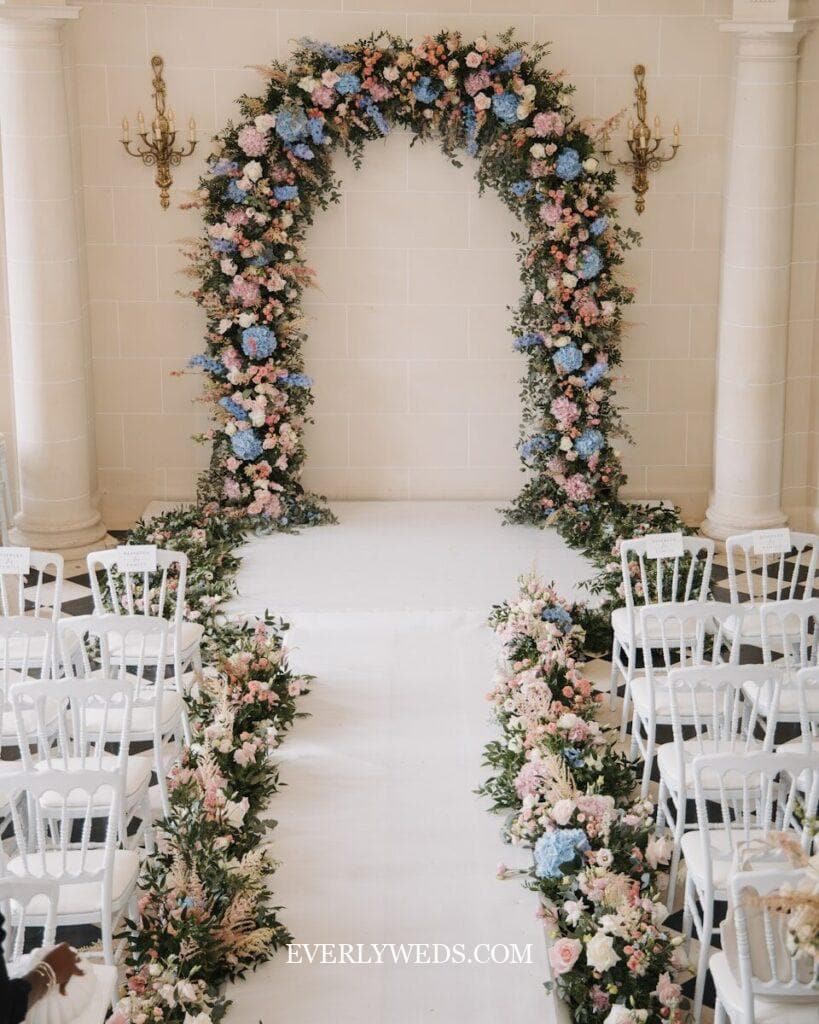
This is the combination I used for my own lakeside wedding and it holds up. Peach is warm and soft without being pink. Blue delphinium is the most affordable blue wedding flower you can buy in bulk, around $8-$12 a bunch from a wholesale supplier like Flower Moxie. Together they feel romantic but not saccharine.
For the full palette: pull in ivory, silver dollar eucalyptus, and a warm sage green for your foliage. Bridesmaids look great in dusty blue, and the guys can wear a warm sand suit with a peach ranunculus boutonniere. Keep your linens ivory, not white. White will fight the warmth of the peach.
Anchor flowers: Juliet garden roses or Free Spirit roses for peach, blue delphinium for the blue. Both are in season late spring through early fall and are widely available.
2. White Peony + Sage Green
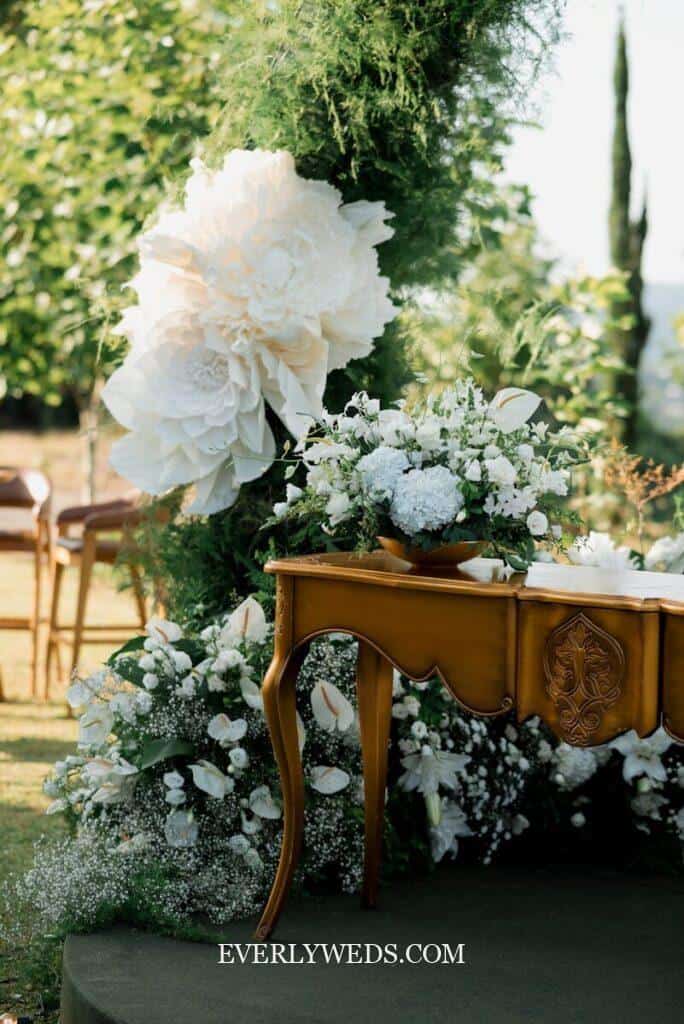
Peonies are a late spring flower, which means if your wedding is in May or June, you have perfect timing. White peonies are one of those flowers that genuinely look expensive even when you haven’t spent a lot, especially when paired with the soft gray-green of lamb’s ear or eucalyptus.
Full palette: white, sage green, and warm champagne. This one works beautifully at garden venues, vineyards, and any outdoor space with natural greenery. Bridesmaids in sage chiffon. Groomsmen in a light gray suit with a sage tie. Centerpieces that are low and lush, no tall candelabras needed. Everything feels organic and easy, which is the goal.
Budget note: peonies are available at Trader Joe’s for around $10-$12 a bunch in season. If you’re doing DIY flowers, this is one of the most manageable palettes to pull off yourself.
3. Lavender + Dusty Rose + Cream
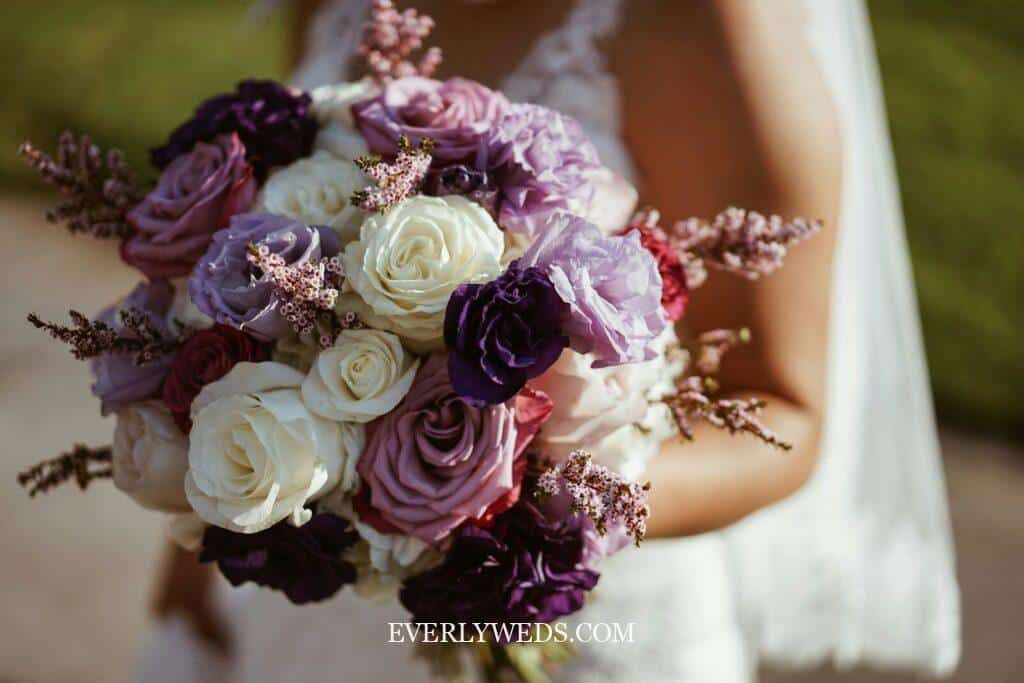
Lavender as a cut flower is one of the most underused options in wedding florals. It smells incredible, it photographs in that soft purple-gray that Pinterest is obsessed with, and a fresh lavender bundle tied to a bouquet adds scent and texture for almost nothing. A 25-stem bunch from a local farm stand runs about $6-$8.
Pair it with dusty rose lisianthus, which is a budget bride’s secret weapon because it looks like a rose but costs a fraction of the price, and cream garden roses for your big anchor blooms. This palette reads as romantic and feminine without leaning too pink. It works for spring and early summer. It also photographs beautifully in golden hour light, which your photographer will thank you for.
4. Coral Ranunculus + Ivory + Terracotta
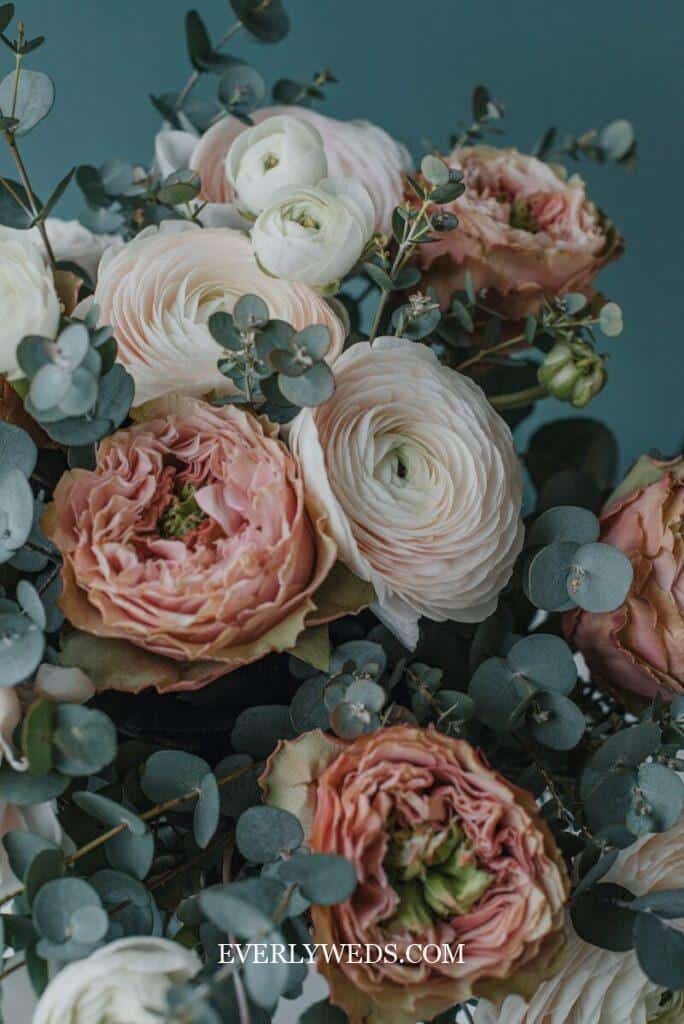
Ranunculus is one of those flowers that makes any arrangement look like it was done by a professional florist, even when you made it yourself at your kitchen table. Coral ranunculus is in season winter through spring, and a bunch of 10 stems from a wholesale supplier like Mayesh runs about $15-$20.
Build the palette from there: ivory for softness, terracotta pots and ribbon for warmth, pampas grass or dried grasses for texture. This is a boho palette that doesn’t look like every boho wedding from 2019. It works especially well at desert venues, winery barn spaces, and any outdoor setting with warm wood tones. Bridesmaids in terracotta or rust. Guys in a tan suit, no tie, open collar. Relaxed and intentional.
5. Emerald Green + Champagne + Deep Blush
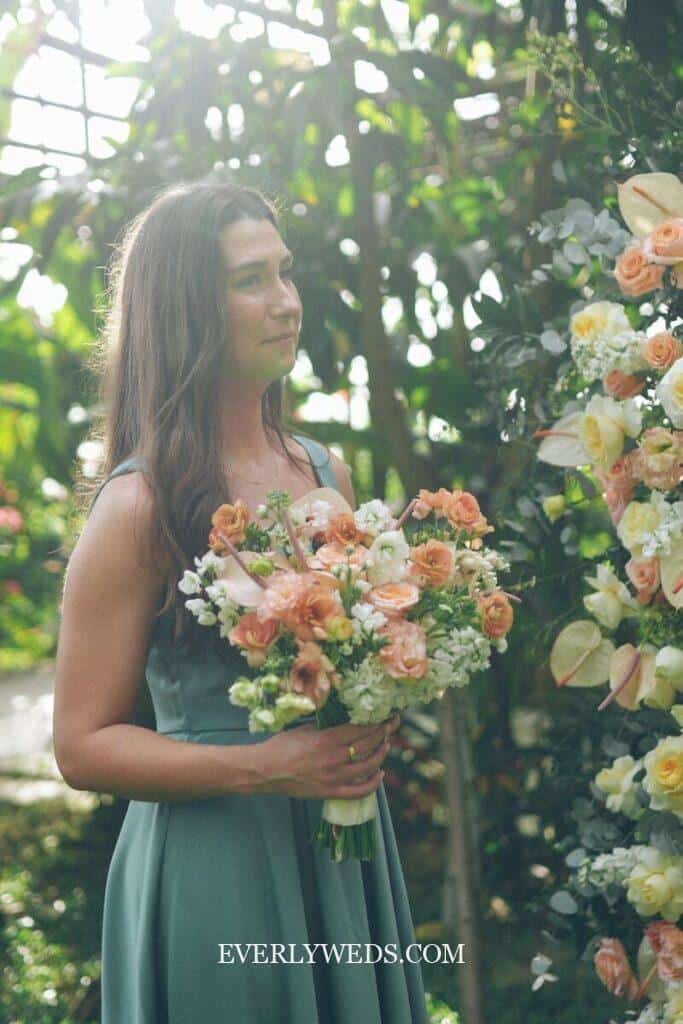
If you want lush and romantic without going full burgundy, this is your palette. Emerald green is really having a moment right now. The Knot’s 2025 real weddings data showed green as one of the top up-and-coming wedding colors, with over 33% of couples using it. And it makes sense, because green does all the heavy lifting in floral arrangements. It makes every other color look better.
For anchor flowers, look at garden roses in a deep blush like Keira or Miranda varieties from David Austin. Add in lots of greenery, eucalyptus, smilax vine if your florist can source it, and Italian ruscus. Champagne linens and gold candleholders pull out the warmth. This palette looks expensive. It doesn’t have to be.
6. White Hydrangea + Navy + Gold
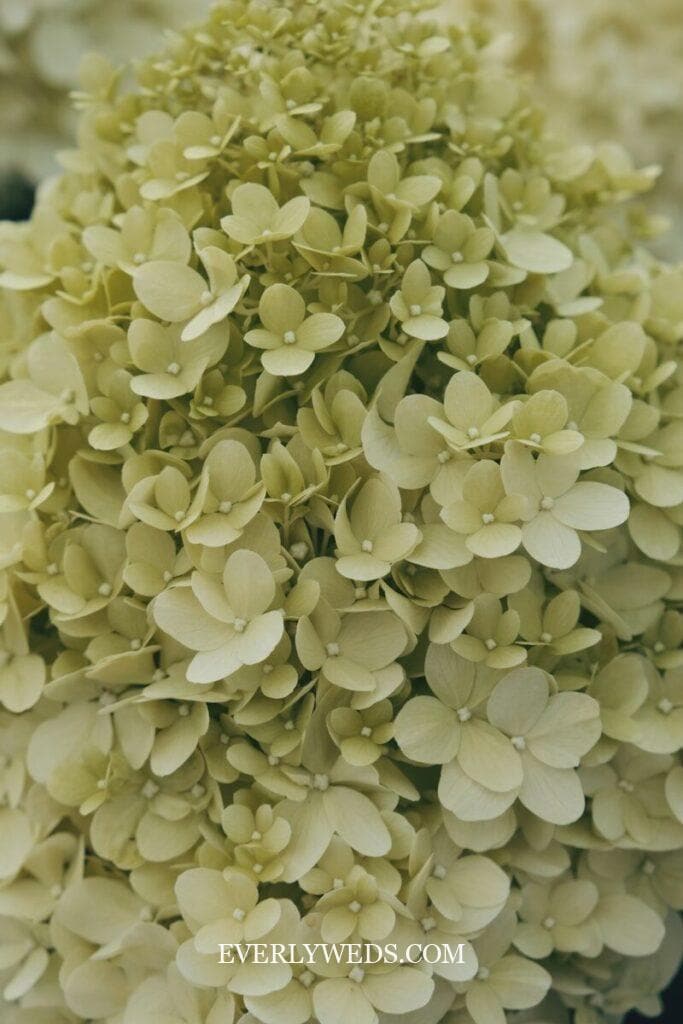
Hydrangeas are the best filler flower in the business. A single stem fills a vase the way three other flowers can’t. White hydrangeas are available nearly year-round, they’re affordable at around $3-$5 a stem wholesale, and they hold up well in warm temperatures if you condition them properly and give them a fresh cut before the ceremony.
Navy and gold with white hydrangeas is classic and it works. Navy bridesmaid dresses, gold charger plates, white florals. It’s a combination that photographs beautifully regardless of your venue. The one thing to get right: use warm gold, not yellow gold or silver. The distinction matters more in photos than you think.
7. Sunflower + Deep Burgundy + Warm Wheat
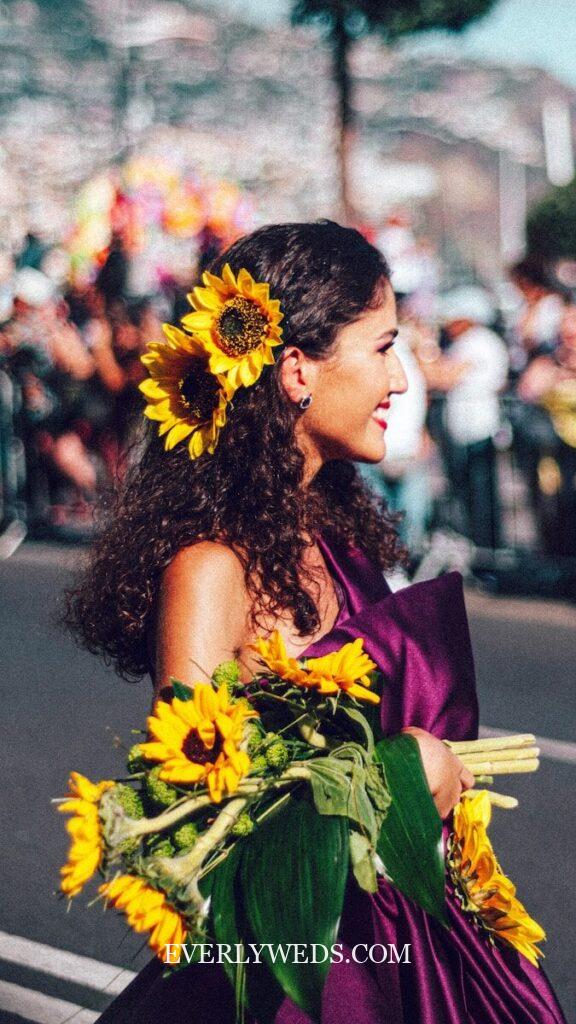
Sunflowers are one of those flowers people dismiss as too casual, and I think that’s a mistake. A sunflower bouquet held together with deep burgundy dahlias and warm dried wheat stalks is genuinely stunning. It’s also one of the most budget-friendly anchor flower options available, especially for late summer and fall weddings when sunflowers are locally grown and cheap.
Full palette: golden yellow, deep burgundy, and warm creamy wheat. Think barn weddings, outdoor farm venues, and any setting with natural wood. This is also a really practical palette for the couple who wants to DIY their own flowers. Sunflowers and dahlias are forgiving to work with, meaning they don’t wilt immediately when you’re fussing with them, and the dried wheat elements require zero conditioning.
8. Blue Thistle + Blush + Silver Eucalyptus
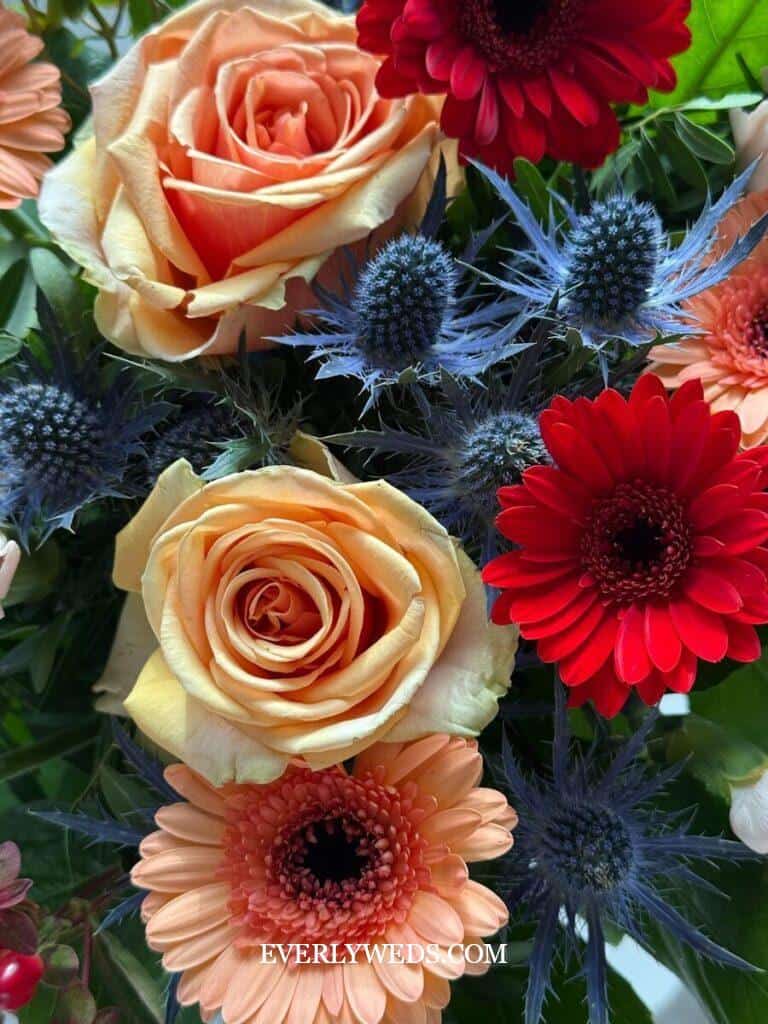
Blue thistle is one of the most underrated wedding flowers available and it costs almost nothing. A bunch of 10-12 stems from a wholesale supplier runs about $8-$12 and it adds an incredible spiky texture that makes soft, round flowers like blush roses or peonies look even more beautiful by contrast.
Pair it with blush Quicksand roses, which are one of the most reliable and widely available blush roses on the market, and silver dollar eucalyptus for foliage. This palette is soft but has an edge to it, which I think is exactly the right combination for a wedding that doesn’t want to look like every other soft pink wedding. The blue in the thistle reads as something unexpected and the overall effect is quietly unique.
9. Dahlias in Deep Plum + Dusty Miller + Cream
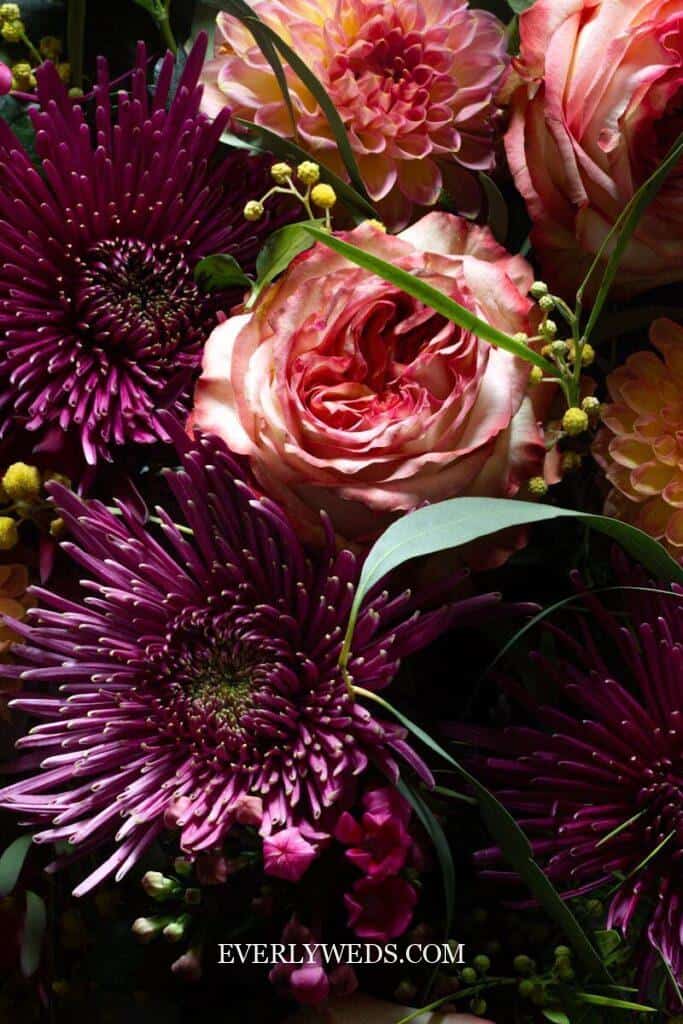
Dahlias in fall are one of the great gifts of wedding planning. They’re in peak season August through October, they’re locally grown in most of the US, and a deep plum café au lait or black dahlia variety looks genuinely dramatic without any effort on your part. The flower does the work.
Dusty miller adds a silvery gray leaf that tones everything down beautifully. Cream roses fill in the gaps. The full palette is plum, slate gray, cream, and a little warm gold. It works for fall and early winter. It’s one of those combinations that looks incredible in candlelight, so if you’re doing a lot of taper candles on your tables, this is the palette that rewards that choice.
10. Tropical Protea + Blush + Muted Orange
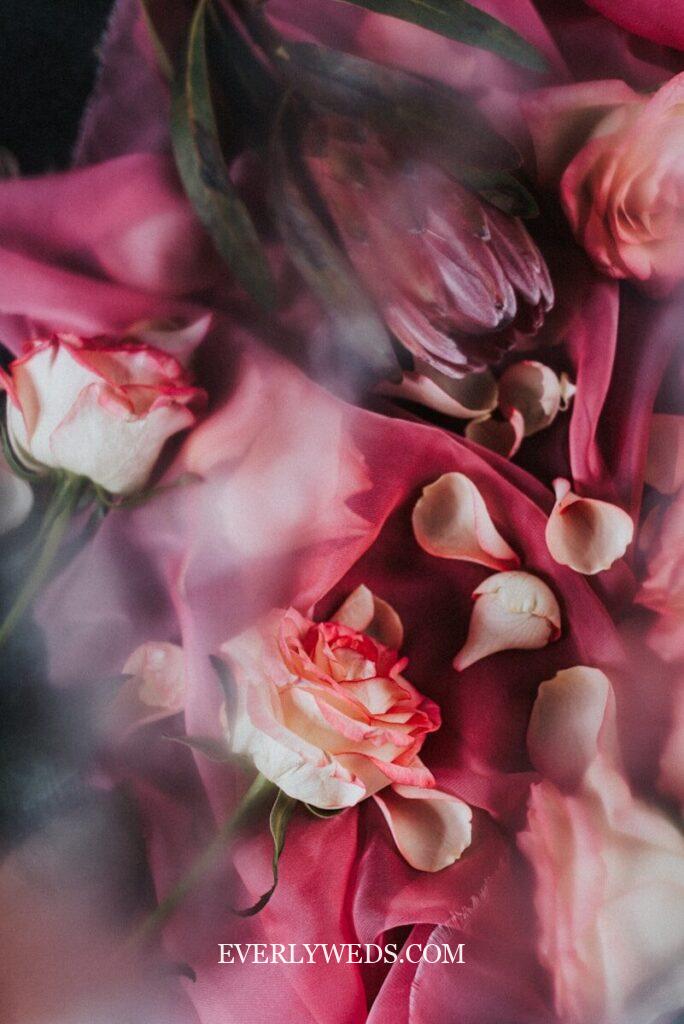
Protea is the anchor flower for the couple who has looked at every standard bridal bouquet photo and felt nothing. A king protea or pink ice protea is sculptural, graphic, and unlike anything else you’ll see in a wedding photo. It’s not cheap, a single king protea stem runs $8-$15 depending on the source, but you don’t need many. Two or three protea in a bouquet, surrounded by blush roses and muted orange ranunculus, and the protea carries the whole arrangement.
This palette works for destination weddings, beach or tropical venues, and any couple whose aesthetic leans toward the unconventional. It’s also one of those palettes that looks completely different depending on what foliage you put around it. Add tropical leaves for a lush resort feel. Add dried pampas grass for something more muted and modern.
11. Sweet Pea + Lilac + Soft Yellow
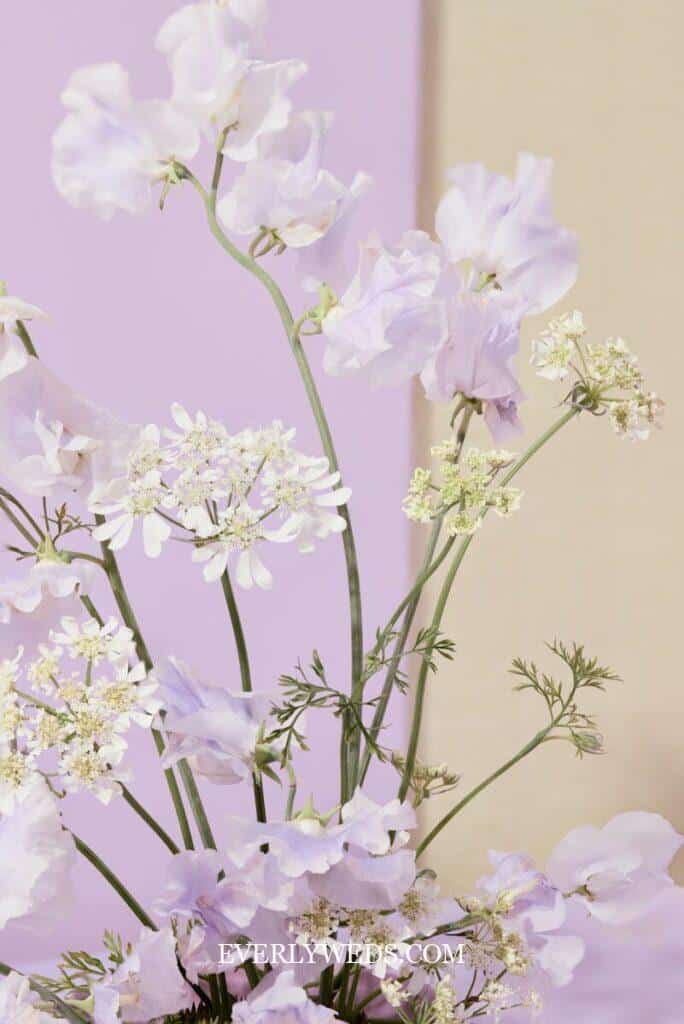
Sweet peas have one of the most beautiful natural colors of any wedding flower, ranging from soft white through blush, lilac, lavender, and magenta. They’re a spring flower, typically available April through June depending on your region. They’re also fragrant in a way that makes your ceremony space smell genuinely incredible.
A sweet pea, lilac, and soft butter yellow palette is the kind of combination that looks like you spent months planning it and three minutes executing it. It has that effortless, slightly wild look that florists charge a lot of money to achieve. If you’re doing DIY flowers, this is one of the most achievable high-impact palettes. A loose, garden-style bouquet with sweet peas doesn’t need to be structured. The flower tells you where it wants to go.
12. Dusty Blue Hydrangea + Mauve + Antique White
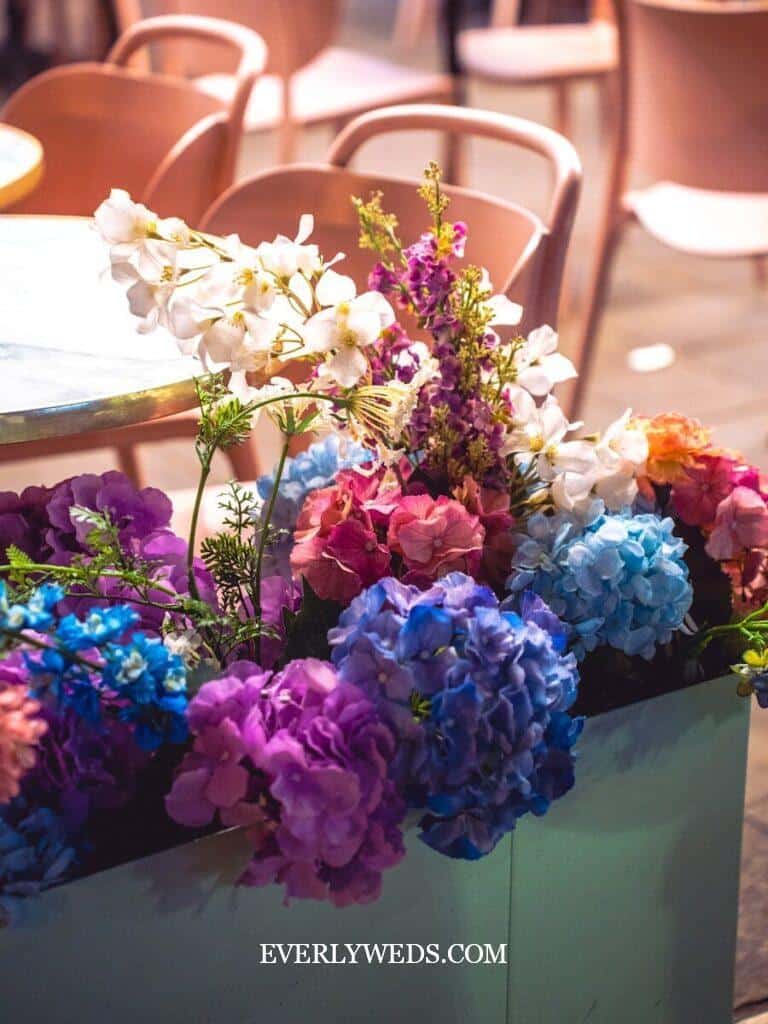
Dusty blue hydrangeas are one of those flowers you see everywhere on Pinterest and then discover that they’re actually a dried flower product, not a fresh one. Real hydrangeas come in white, blush, lavender, and various greens, but to get that dusty blue, you’re working with either dyed fresh flowers or dried bunches. Both options are beautiful and both are widely available from floral supply companies like FiftyFlowers.com.
Pair the dusty blue with mauve roses, which is basically a muted rose-brown that photographs as one of the most sophisticated colors in weddings right now, and antique white for balance. This palette feels timeless rather than trendy, which matters when you’re looking at your photos in 20 years. It works at pretty much any venue. Outdoor, indoor, garden, ballroom. It’s that versatile.
One Last Thing Before You Choose Your Color Idea
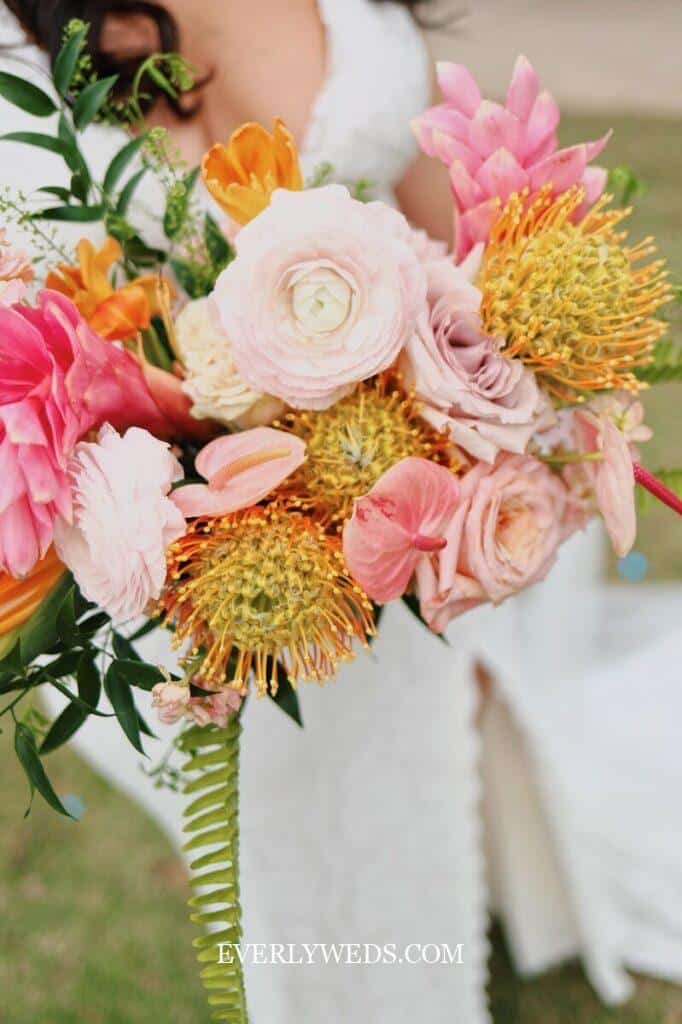
Pick your anchor flower first. The one you can’t imagine your wedding without. Then find out when it’s in season in your region, what it costs wholesale, and what naturally grows alongside it. That answer is your palette. Everything else, the bridesmaid dresses, the linens, the ribbon on the stems, is just pulling from what the flowers already tell you.
It’s a lot simpler than the mood boards make it look. And it’s usually cheaper too.
– Sarah


